
Dedicated Vs Freelancers: How to Evaluate Stability, Risk and Continuity

Dedicated vs freelancers comes down to stability, risk and continuity. Freelancers suit focused, short-term or specialist work. Dedicated teams reduce single-person dependency on long-running products. The deciding factor is whether replacement and knowledge-transfer infrastructure exists.
A freelancer quotes you a good rate and can start Monday. Eight months later they take a full-time job, and the only person who understands your payments integration is gone.
That is the risk everyone imagines. It is real, and it is also not the whole picture. Dedicated teams lose people too, and a well-documented freelancer can be lower risk than a badly run team.
The useful question is not which model is safer in the abstract. It is whether replacement and knowledge-transfer infrastructure exists, and who is responsible for building it.
This guide compares dedicated vs freelancers across the three things that actually decide the outcome: stability, risk, and continuity.
Stability is whether the work keeps moving. Risk is what can go wrong and how badly. Continuity is whether knowledge survives people leaving.
You will get a comparison table, a risk matrix with mitigations, what actually happens when a developer leaves, five scenarios, and a decision framework.
No claim that freelancers are unreliable. Many are excellent, and the data shows high-growth companies use them deliberately. The failure mode is using one model where the other belongs.
Dedicated team vs freelancer at a glance
A freelancer is one independent professional contracted for specific work. A dedicated development team is a group assigned to your product through a technology partner, with a provider managing delivery.
| Factor | Dedicated development team | Freelancer |
| Stability | Team persists through individual changes | Depends entirely on one person |
| Continuity | Knowledge spread across several people | Knowledge held by one person |
| Availability | Provider covers absence and leave | Absence stops the work |
| Accountability | Delivery accountability, if contracted for | Task responsibility for agreed deliverables |
| Management | Provider supplies a lead | You manage, or nobody does |
| Scalability | Provider adds roles from an existing pool | You find and coordinate more individuals |
| Technical coverage | Multiple disciplines in one engagement | One skill set, occasionally two |
| Knowledge retention | Retained by the team | Leaves with the person |
| Security | Vendor policies, offboarding, contractual terms | Depends on the individual arrangement |
| Communication | Structured ceremonies and reporting | Direct and often faster |
| Cost predictability | Fixed monthly capacity | Variable, tied to hours worked |
| Replacement risk | Provider carries it | You carry it |
| Long-term suitability | Strong | Workable, with deliberate mitigation |
| Best suited for | Ongoing product development | Bounded, specialist, or short-term work |
Read that table as a description of where risk sits, not a scorecard. Almost every row is really answering the same question: who absorbs the problem when something goes wrong.
With a freelancer, you do. With a dedicated team, the provider does, and the rate reflects that.
What is a dedicated development team?
A dedicated development team is a group of engineers employed by a provider, assigned exclusively to one client, and managed as a unit rather than as individuals.
The provider assembles the team, employs everyone, and usually appoints a technical lead who runs day to day delivery. That team works on your product only.
A typical unit has backend and frontend engineers, a QA specialist, a tech lead, and shared DevOps or design capacity. Composition follows your roadmap.
You keep product ownership. You set priorities, approve scope, and decide what gets built. The provider owns how it gets delivered.
Replacement is the part buyers underrate. If someone resigns, sourcing a substitute is the provider’s problem, and the surrounding team preserves context while it happens.
Knowledge management is structural rather than optional. Several people touch the same code, review each other’s work, and hold overlapping understanding of the system.
Scaling works through the provider. Adding a DevOps engineer for a migration is a conversation, not a recruitment cycle.
The model suits products with a continuous roadmap. If development stops after launch, you are paying for stability you no longer need.
What is a freelancer?
A freelancer is an independent professional contracted directly by you to deliver specific work, usually paid hourly or by project.
This is a large and increasingly senior market. Upwork’s Future Workforce Index, published April 2025, found 28% of US knowledge workers now freelance, more than 20 million people earning $1.5 trillion in 2024.
Freelancers who work exclusively independently reported a median income of $85,000 in that survey, above the $80,000 reported by full-time employees. This is not a market of people who could not get hired.
The advantages are real. You get direct access to a specific skill, no vendor margin, fast onboarding, and the ability to end the engagement quickly.
For bounded work with a clear definition of done, a good freelancer is often the most efficient option available. Paying for team infrastructure you do not need is waste.
The limitations are structural rather than personal. One person has one availability calendar, one skill set, and one memory of why the system works the way it does.
You also manage them. There is no delivery lead between you and the work, so coordination lands on whoever in your organisation has capacity.
One disclosure on that data. Upwork is a freelance marketplace, so it has a commercial interest in these findings. The methodology is published, which is more than most sources in this space offer.
Stability compared: what happens when someone is unavailable?
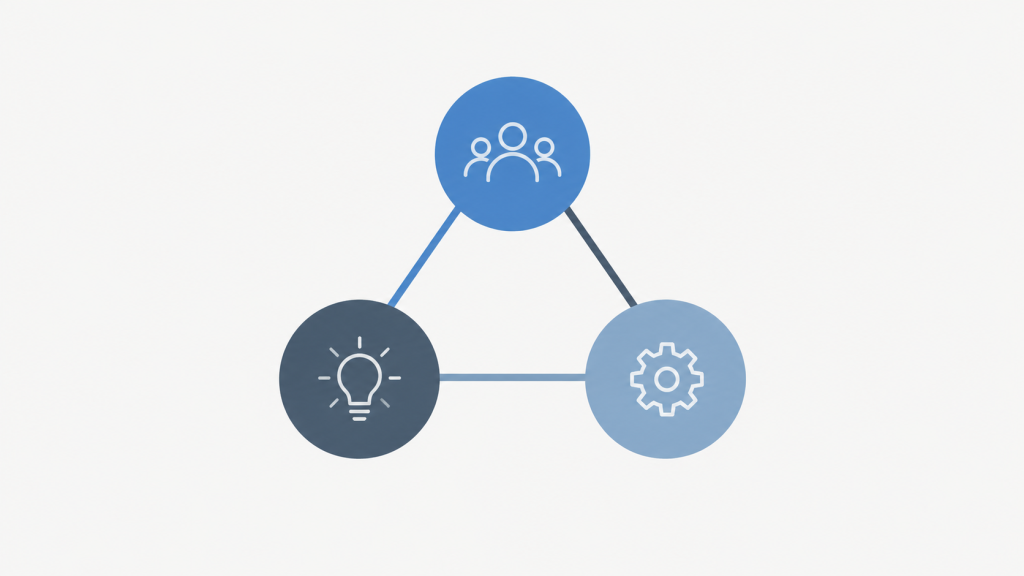
Dedicated teams absorb absence. Freelancer engagements stop. That is the core stability difference, and everything else follows from it.
Availability
A freelancer taking two weeks of leave means two weeks of no progress on their work. Illness, a competing client, or a family emergency has the same effect.
Dedicated teams have overlapping coverage. Another engineer picks up the critical path, slower than the specialist would, but the work continues.
Ask about this explicitly in both cases. A freelancer who tells you their notice period and holiday plans upfront is managing the risk properly.
Team continuity
Continuity is not the same as permanence. Nobody stays forever, and treating a dedicated team as a guarantee against turnover is a mistake.
US Bureau of Labor Statistics data put median employee tenure at 3.9 years in January 2024, down from 4.1 in 2022 and the lowest since 2002. Provider employees are not exempt from that.
What a dedicated team changes is where the knowledge sits when someone goes. If four people have worked on a service, one leaving is a setback. If one person has, it is a crisis.
Resource replacement
Replacing a freelancer means starting a search, evaluating candidates, negotiating, and onboarding someone onto an unfamiliar codebase. Realistically that is weeks.
Replacing someone on a dedicated team means the provider draws from an existing pool, and the surrounding team briefs the new person. Usually days.
The difference is not talent. It is that one arrangement has replacement infrastructure and the other does not.
Long-term commitment
Freelance engagements are easy to start and easy to end, which is genuinely valuable when requirements are uncertain.
That flexibility inverts over a multi-year roadmap. Repeated turnover means repeated onboarding, and each cycle loses context nobody wrote down.
Operational resilience and single-person dependency

Single-person dependency means one individual holds knowledge the project cannot function without. Engineers call it a low bus factor.
Here is the part most comparisons get wrong. Single-person dependency is not a property of freelancing. It is a property of your engineering practices.
A dedicated team where only one engineer has ever touched the billing service has exactly the same problem, with a bigger invoice.
Dedicated teams make the problem less likely through code review, shared ownership, and rotation. They do not make it impossible, and you should verify rather than assume.
Risk compared: a practical risk matrix
No rating below is universal. Risk depends on the individual, the provider, the contract, and how you run the project. Treat these as typical unmitigated positions, then apply the mitigation column.
| Risk | Freelancer | Dedicated team | How to reduce it |
| Availability | High | Low | Contractual notice periods, documented coverage plan |
| Knowledge loss | High | Medium | Documentation as a deliverable, pair on critical systems |
| Delivery | Medium | Low to medium | Written acceptance criteria, milestone reviews |
| Security | Medium | Low to medium | Least-privilege access, offboarding checklist, signed NDAs |
| Communication | Low | Medium | Agreed channels and response times, timezone overlap |
| Quality | Medium | Medium | Code review by someone independent of the author |
| Dependency | High | Medium | Rotate ownership, no single owner of a critical service |
| Scaling | High | Low | Agree scaling terms before you need them |
| Compliance | Medium | Low | Verify certifications and evidence, not claims |
| Project continuity | High | Low | Repository access, environment control, IP assigned on payment |
Two rows deserve a second look.
Communication risk is often lower with a freelancer. You talk to the person doing the work, with no lead in between and no relay of context.
Quality risk is medium in both columns. A dedicated team gives you process, not guaranteed skill, and a strong individual freelancer can outperform a weak team comfortably.
What happens when a developer leaves?
This is the scenario that decides most engagement models, so it is worth walking through properly.
When a freelancer leaves, work stops on the day they stop. There is no handover unless you contracted for one, and their understanding of the system leaves with them.
You then run a search, evaluate candidates, and onboard someone onto code they have never seen. The replacement bills full rate while learning what the last person already knew.
Expect weeks of reduced velocity, and expect the new person to disagree with some earlier decisions because the reasoning was never recorded.
When someone on a dedicated team leaves, the provider replaces them and the remaining team holds the context. Delivery slows rather than stopping.
Your management effort differs sharply too. In the first case you run the whole replacement process. In the second you are informed about it.
The general lesson applies to both. Replacement infrastructure matters more than the label on the contract, and you can build it into a freelance arrangement if you insist on it upfront.
Continuity and knowledge retention
Software projects accumulate knowledge that never appears in the code. That accumulated understanding is an asset, and it depreciates when people leave.
What actually sits in someone’s head includes why the architecture was chosen, which business rules are deliberate and which are accidents, and how the deployment behaves under load.
It also includes the third-party integrations that break in specific ways, the bugs everyone has agreed to live with, and the technical debt that was taken on knowingly.
None of that is usually documented. Teams write down what the system does far more often than why it does it.
Poor knowledge retention shows up later as cost. Future work gets estimated wrong, the same problems get solved twice, and engineers rewrite things that were correct for reasons nobody remembers.
The practical response is the same in both models. Make documentation a contractual deliverable, require architectural decision records, and never let one person be the only one who has touched a critical service.
Accountability: who is actually responsible?
Freelancers carry task responsibility for agreed deliverables. Dedicated teams can carry delivery accountability, but only if the contract says so.
The distinction matters more than almost anything else in this comparison.
Task responsibility means the person is answerable for the work they agreed to do. If the specification was wrong or the scope was incomplete, that is not their problem.
Delivery accountability means someone is answerable for the outcome, including the parts nobody specified. That is a different commitment and it costs more.
Do not assume you have bought the second one. A dedicated team engagement priced on time and materials gives you task responsibility with more people attached.
The market is moving in this direction. Deloitte’s Global Outsourcing Survey, based on responses from more than 500 global executives, found 67% adopting outcome-based models, up from 45% two years earlier.
If accountability matters to you, get it written down with defined milestones and consequences. Vague accountability in a contract is worth nothing when a release slips.
Cost: freelancer vs dedicated development team
Freelancers almost always cost less per hour. Whether they cost less in total depends on the length of the engagement and how much management you absorb.
An hourly rate does not include your coordination time, the cost of a gap when someone is unavailable, replacement and re-onboarding, or rework caused by lost context.
Total cost of ownership counts all of that. Over a short bounded project the freelance rate advantage usually holds. Over a multi-year product it frequently does not.
Accelerance, which surveys software outsourcing partners annually, puts it plainly through its managing director Olivier Poulard, who calls hourly rates “a poor measure of the true cost of software development.”
The arithmetic is not complicated. A cheaper engagement that needs more specification, more review, and more of your senior engineers’ attention can cost more per outcome.
The reverse trap is equally real. Paying dedicated team rates for six weeks of bounded work is straightforward waste, and no amount of stability justifies it.
Communication and collaboration
Communication quality depends on process, not on contract type. This is where assumptions about both models tend to be wrong.
Freelancers often communicate better. There is one person, no internal relay, and direct access to whoever is writing the code.
Dedicated teams communicate more formally through sprint ceremonies, written reporting, and a lead who aggregates. That is more robust and slower.
Timezone overlap matters more than either. Four hours of shared working time changes an engagement more than any process document.
Agree the specifics upfront in both cases: channels, expected response times, which meetings are mandatory, and who talks to your stakeholders.
Security and compliance considerations
Freelancers are not inherently insecure. Security depends on the controls you apply, and most breaches involve access that was never revoked.
Apply the same standards to both. Grant least-privilege repository and environment access, use your own credential management, and never share production credentials directly.
Get intellectual property assignment in writing, effective on payment. This is the single most commonly missed clause in freelance contracts and it is expensive to fix later.
Offboarding is where freelance arrangements fail most often. Write the checklist before the engagement starts: revoke access, rotate credentials, confirm handover, transfer accounts.
Providers can offer contractual security policies, background checks, and compliance evidence. If you handle regulated data, ask for the evidence rather than the assurance.
Scalability: freelancer vs dedicated team
Scaling with freelancers means finding, vetting, and coordinating more individuals yourself. Each addition multiplies your coordination load.
It also rarely gives you a functioning team. Three freelancers who have never worked together are three parallel workstreams until someone integrates them, and that someone is usually you.
Dedicated teams scale through the provider. Adding QA, DevOps, design, or technical leadership draws on an existing pool with established working practices.
The trade is speed of reduction. Releasing a freelancer takes a notice period. Reshaping a dedicated team takes a conversation and a contract amendment.
When are freelancers the better choice?
Choose a freelancer when the work is bounded and the dependency is manageable.
Small projects with a clear finish line fit well. If you can describe done in a paragraph, you probably do not need a team.
Highly specialised requirements fit too. Someone who has done six payment gateway integrations will beat a generalist team on that specific task.
Short engagements favour freelancers because you avoid paying for infrastructure you will not use long enough to benefit from.
Clearly defined work reduces the accountability gap. When the specification is solid, task responsibility is close enough to delivery accountability.
Existing internal technical leadership matters most of all. If you have someone who can direct the work and review the output, the management gap closes.
And when the dependency is genuinely manageable, meaning nothing critical rests on one person, the risk is acceptable.
When is a dedicated development team the better choice?
Choose a dedicated team when the work is continuous and continuity has real value.
A long-term roadmap is the clearest signal. Beyond about a year, the compounding value of accumulated knowledge starts to outweigh the rate difference.
Continuous development after launch is the same argument. Products that keep evolving reward teams that remember why decisions were made.
Multiple skills at once favour a team. Assembling backend, frontend, QA, and DevOps individually means four searches and four coordination relationships.
Predictable capacity matters when you are making commitments to customers or a board. Fixed monthly capacity is easier to plan against than variable hours.
Difficult internal recruitment is a practical driver. If a search would take nine months you do not have, a provider is buying you time.
Ongoing maintenance is the underrated one. Maintenance is where knowledge retention pays, and where freelance turnover hurts most.
Explore [dedicated development team services] to see how these teams are structured and governed.
Five scenarios and which model fits
These are composites built from common patterns.
Building an MVP
A founder with funding and eighteen months of roadmap, no engineering team.
A small dedicated team usually wins, because the founder cannot manage three contractors and sell at the same time.
The counterargument is real though. If the product direction is genuinely unsettled, two freelancers for eight weeks of prototyping is the cheaper way to find out what to build.
A long-term SaaS product
Continuous development, paying customers, a roadmap extending years.
A dedicated team, clearly. This is the case the model exists for, and freelance turnover would compound into a maintenance problem.
A one-time technical task
A Stripe migration, a performance audit, an accessibility remediation with a defined finish.
A freelancer, and probably a specialist one. A dedicated team is overbuilt for a six-week problem, and the commitment outlasts the need.
Pair them with an internal engineer so the knowledge stays after they leave.
An enterprise application
Regulated data, compliance requirements, integration with legacy systems, multiple internal stakeholders.
A dedicated team or an internal one. The determining factors here are compliance evidence, security processes, and contractual accountability rather than cost.
Freelancers can work on enterprise software, and many do. What they usually cannot provide alone is the audit trail and the replacement guarantee.
A rapidly growing product
Usage climbing, the roadmap expanding faster than hiring, pressure on reliability.
A dedicated team, because scaling speed and continuity are both under strain at once. This is the situation where coordinating individual freelancers fails most visibly.
How to choose: a decision framework
Work through these with your engineering and product leadership. The answers converge quickly.
- How long will this work actually run, honestly?
- What breaks if the person doing it disappears next month?
- Do we need one skill, or an entire delivery capability?
- Who will manage this person day to day, and do they have capacity?
- How much undocumented context does our system carry?
- How likely is it that requirements change substantially this year?
- How fast might we need to add or remove capacity?
- How sensitive is the data, and what evidence will we need for compliance?
- Do we have internal technical leadership to direct and review the work?
- If a milestone slips, who should be accountable, and does the contract say so?
Choose a freelancer if the work is bounded, the skill is specific, you have technical leadership internally, and nothing critical would rest on one person.
Choose a dedicated team if the work is continuous, you lack internal management capacity, knowledge retention matters, or you need accountability for outcomes rather than tasks.
Consider a hybrid if you need stable core capacity plus occasional specialist input, and you can define clear ownership boundaries.
Can you use freelancers alongside a dedicated team?
Yes, and the evidence suggests the better-performing companies do exactly that.
In Upwork’s survey of over 400 publicly traded US organisations, those in the top quartile for year-on-year revenue growth were more likely to use freelancers (45%), managed services (50%), and agencies (39%).
Note that managed services scored higher than freelancers in that data, published by a freelance marketplace. High-growth companies are not choosing one model. They are running several.
The common pattern is a dedicated core team owning the product, with freelance specialists brought in for bounded work: a security audit, a UX engagement, a performance sprint.
The rule that makes hybrids work is simple. A specialist can own a piece of work, but never be the only person who understands a system you depend on.
Pair every freelance specialist with someone from the core team. Require a written handover. Then the expertise transfers and the dependency does not.
If you are weighing a hybrid, our [IT consulting services] team can map ownership boundaries before you commit.
Dedicated vs freelancers: which is better?
Neither, and the honest answer depends on two variables: how long the work lasts and how much single-person dependency you can tolerate.
Freelancers are generally better for focused, short-term, or highly specialised requirements, particularly when you have internal technical leadership to direct the work.
Dedicated teams are generally better for long-running products where continuity, scalability, and team-level accountability matter more than the hourly rate.
Hybrid models work when you need both, provided ownership boundaries are explicit and no specialist becomes a single point of failure.
If you find yourself arguing that one model is better in the abstract, you are answering the wrong question.
Frequently asked questions about dedicated teams and freelancers
Is a dedicated development team better than freelancers?
Not universally. Dedicated teams are better for long-running products where continuity and accountability matter, because knowledge is spread across several people. Freelancers are better for bounded, specialist, or short-term work.
The deciding factors are engagement length, how much internal management capacity you have, and whether anything critical would rest on one person.
Are freelancers cheaper than dedicated developers?
Per hour, almost always. In total, not necessarily. Freelance rates exclude your coordination time, gaps during absence, replacement and re-onboarding, and rework caused by lost context.
Over a short bounded project the rate advantage usually holds. Over a multi-year roadmap, repeated turnover often erases it.
What is the biggest risk of hiring a freelancer?
Single-person dependency. One individual holds knowledge the project needs, and there is no replacement infrastructure if they become unavailable.
It is manageable rather than disqualifying. Require documentation as a deliverable, pair them with an internal engineer on critical systems, and agree notice periods in writing.
What happens if a freelancer leaves a project?
Work stops that day, and their understanding of the system leaves with them unless you contracted for a handover. You then run the search, evaluate candidates, and onboard someone onto unfamiliar code.
Expect weeks of reduced velocity. The replacement bills full rate while learning what the previous person already knew.
Are dedicated development teams more reliable?
More resilient, which is not quite the same thing. A dedicated team absorbs absence and turnover because several people share context, and the provider carries replacement responsibility.
Reliability of the individual work still depends on the engineers and the provider’s practices. Process reduces variance, it does not guarantee skill.
Which model is better for long-term software development?
Dedicated teams, usually. Long-running products accumulate knowledge about architecture, business rules, and past decisions, and that knowledge is what makes future work efficient.
Freelance engagements can work long term, but they need deliberate mitigation: documentation as a deliverable, overlapping ownership, and a plan for turnover.
Can freelancers work on enterprise software?
Yes, and many do successfully. What an individual usually cannot provide alone is contractual delivery accountability, compliance evidence, background checks, and a replacement guarantee.
For regulated systems, the deciding factor is rarely technical capability. It is whether the engagement produces the audit trail your compliance obligations require.
What is the difference between a freelancer and a dedicated developer?
A freelancer is an independent professional you contract directly and manage yourself. A dedicated developer is assigned to your product through a provider that employs them and usually manages delivery.
The practical difference is who handles replacement, absence, HR, and accountability. With a freelancer, that is you.
Can I combine freelancers and a dedicated development team?
Yes, and high-growth companies commonly do. The usual pattern is a dedicated core team owning the product, with freelance specialists for bounded work like a security audit or performance sprint.
Pair every specialist with someone from the core team and require a written handover, so expertise transfers without creating a dependency.
How do I choose between a freelancer and a dedicated team?
Answer three questions. How long will the work genuinely run, what breaks if the person disappears next month, and do you have internal leadership to direct and review the work?
Bounded work with internal leadership points to a freelancer. Continuous work without it points to a dedicated team.
Final takeaway
Five things decide this: stability, risk, continuity, cost, and control. The hourly rate speaks to one of them.
Stability asks whether work continues when someone is unavailable. Risk asks what can go wrong and who absorbs it. Continuity asks whether knowledge survives turnover.
Cost has to mean total cost, including your coordination time and the price of re-onboarding. Control asks who directs the work and who is accountable when it slips.
The underlying question beneath all five is whether replacement and knowledge-transfer infrastructure exists. A dedicated team provides it. With a freelancer, you build it or you carry the risk.
Neither answer is wrong. Choosing without asking the question is.